Wine Cellar Software, Bottle Tags, and Products
Wine Cellaring Software provides you a simple way to locate and track bottles in your wine cellar. The benefits of using wine cellaring software and related products are immediate:
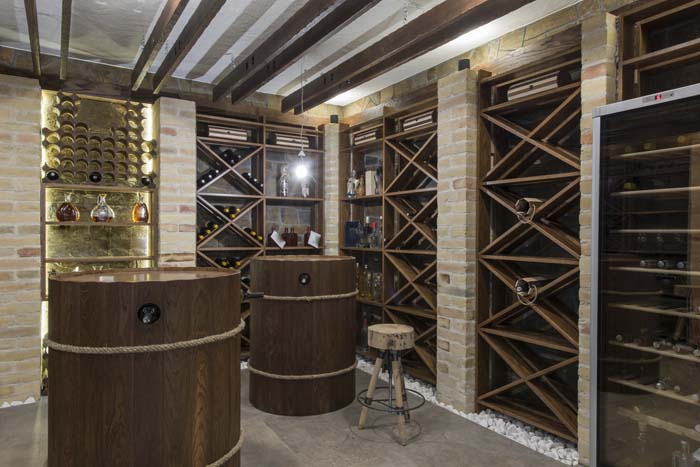
Modern wooden wine cellar
- drink your wine at its optimum age
- easily select your wine
- easily locate your bottles by using bottle tags
- optionally you can record and share wine tasting notes
Your essential cellaring products are:
- Cellar Software
- Bottle Tags
- Barcode Scanners for easy data entry
- A Wine Cellar Thermometer
Cellar Software
There are many brands of Wine cellaring software now available online. They can be used with or without bottle tags, and they are comprehensive but easy to use.
The Advantages of Wine Cellar Software
The business of wine is one of the world’s oldest industries and it continues to thrive as the demand for wine keeps soaring. From the vineyards of Tuscany to the vineyards of the Napa Valley, wine has amassed a legion of fans around the world regardless of their social-economic status. There is a bottle for every budget ranging from basic wines to premium brands. Wine can be classified according to origin, variety (type of grape used) and color (red, white). Consumers are spoilt for choice in their wine when it comes to selecting the perfect bottle to serve at dinner parties, wedding receptions or a toast in the office.
Collecting wines was once a reserve for the elite population who would fill their cellars with fine wines either for consumption or to simply age the wine. Nowadays, wine collectors are a dime a dozen. Commercial wine collectors are keen to provide the best wines in the market to accommodate the changing tastes of consumers. Collecting wine for business may pose a challenge in managing your collection to maximize value. Wine collectors handle different types of wines on a daily basis and are expected to have information about each type of wine at their fingertips. Keeping updated records of the types of wine, their origins, how to pair wines, and quantity of stock is not an easy task. This is where wine cellar software comes in.
Benefits of wine cellar software
As discussed above, wine collectors could use a little help from modern technology in managing their wine collection, whether for commercial or private use. There are many benefits associated with wine cellar software as follows:
i. Information on each wine
Wine collectors who really know their craft can share detailed information about each bottle of wine in their custody through web pages. The internet revolution has transformed the way we disseminate information leading to a more discerning consumer always yearning for more information, right away! Sharing crucial details about your collection may give you a leg-up from the sea of wine stockers that have flooded the market.
ii. Database of tasting notes
Wine tasting is the sensory examination and evaluation of wine. The taste of wine is probably the most important determinant when deciding what wine to purchase. Wine collectors will often hold wine tasting events aimed at collecting opinions of different bottles that are already in stock or bottles they hope to acquire. Professional wine tasters will meticulously taste each wine presented to them and provide useful descriptions that will help sell the wine. Wine tasting experts use descriptive terms such as sweet, sour, ripe, aromatic, spicy, etc. and even gauge the amount of fruit used in each wine. Cellar software enables you to create a database of these tasting notes and use them to market wine to target consumers.
iii. Track quantity
If you collect wine as a hobby, chances are that you have many brands of wine from all over the world. Wine cellar programs help you to keep track of wine bottles coming in and going out of the cellar. This software is especially helpful for business owners who rely on hired help to manage their wine collection.
iv. Wine chatrooms
Using wine tracking software connects you to fellow wine lovers from around the world. You can exchange information about particular brands of wines, what wines to serve at dinner parties, where to get the best aged wines, etc. Granted, some of these reviews may be just popular opinion but wine experts use these platforms too! Online discussion boards provide continuous reviews of wines that in turn can inform your decision on the variety of wines that interest your clients.
v. Track sales
Wine cellar programs keep records of all orders and purchases to ensure timely deliveries. This software also helps you to update customers on wine auctions, discounted sales, etc. by sending them newsletters on a regular basis.
vi. Accessible from anywhere
Enlisting the help of wine cellar software is not confined to your home or business. You can program this software application on electronic devices such as tablets and phones so you can stay connected as you travel to your next wine adventure.
Wine cellar software is a useful addition to the booming wine industry. This software promises to streamline your wine activities even in your absence. Invest in wine cellar software today and take your business to the next level.
Regional Suggestions For Your Wine Cellar:
Wine Varieties Produced in New Zealand
New Zealand has a fast growing wine production industry that has produced award-winning wines, which show case the brilliant sunshine, clean air and sub-tropical climate. With production volumes of close to 300 million litres of wine annually from over 500 wineries, the country is best known worldwide for its superior Sauvignon Blanc. Other famous wine varieties produced in New Zealand include: Chardonnay, Pinot Noir, Pinot Gris, Riesling, Merlot and Cabernet Sauvignon.
New Zealand is blessed with 10 main wine-producing regions. Auckland, Wairarapa, Gisborne and Hawke’s Bay are located in the country’s North Island while in the South Island, Central Otago, Canterbury and Marlborough are major wine producing regions. The largest wine growing areas are Hawke’s Bay and Marlborough. The following is a brief summary of the wine varieties produced by famous wineries in each region.
Marlborough
Marlborough has more than 100 vineyards and it is commonly called New Zealand’s premier wine producing region – producing the internationally acclaimed Sauvignon Blanc. Another famous wine flavour grown here is Pinot Noir. Thousands of wine connoisseurs visit the South Island every year to enjoy the picturesque scenery and taste the remarkable wines produced here.
Famous wineries include Cloudy Bay, which produces Riesling, Chardonnay, Pinot Noir, and Sauvignon Blanc. They also produce the sophisticated Te Koko by wild fermentation and Te Wahi made by distilling Pinot Noir. Nautilus Estate also produces great Chardonnay, Pinot Noir, Pinot Gris, and Cuvee Brut NV, which it offers at the aromatic doors that have been opened since 1985.
Hawke’s Bay
Hawke’s Bay is New Zealand’s second largest wine region that combines three great wine growing areas – Bridge Pa, Gimblett Gravels and Ngatarawa where a wide variety of exceptional wines are produced to international standards. Since the first vine was planted in 1851, wine producing activities have increased and the region now has over 80 wineries and more than 100 vineyards.
Hawke’s Bay is home to award-winning wineries like Craggy Range, which has an amazing landscape and offers varieties such as the Le Sol Syrah, one of the best reds produced in the country. Other exceptional wine styles include Riesling, Sophia, and Pinot Gris. At the Te Mata winery, established in 1896, you can taste premium quality reds like the Coleraine. Located close to the Te Mata winery, the Black Barn vineyards produce Bordeaux style reds such as Cabernet Franc, Cabernet Sauvignon and Merlot.
Auckland
Auckland is New Zealand’s largest city and the birth place of viticulture in the country. It has more than 100 wineries spread across a vast, geographically diverse area and it is best known for producing excellent Bordeaux style wines. Both large and boutique wineries produce famous varieties of Chardonnay, Merlot and Cabernet Sauvignon.
But innovative wineries like Coopers Creek in Huapai have introduced aromatic whites such as Viognier, Albarino, Gruner Veltliner, and Arneis. Soljans, a prominent Kumeu winery established in 1932 is one of the few wineries to produce Port-style fortified Tawny (a blend of 20 vintage wines). They also produce sparkling Muscat, which is one of the most awarded sparkling varieties from New Zealand.
Central Otago
Central Otago’s southern location, climate, and soil makes it one of the best places to grow and produce Pinot Noir, Pinot Gris and Riesling. Over twenty wineries are located in Queenstown, Wanaka, and Clutha Valley where large vineyards exist. Some of the most famous wineries here include Gibbston Valley Winery, which produces high quality Riesling and Pinot Noir, while Peregrine Winery allows free tasting of Pinot Gris and “Sav” Blanc. Van Asch is another well known brand that comes from Central Otago. Van Asch produces Syrah Rose, Pinot Noir and Riesling.
Gisborne
Gisborne is fondly called the Chardonnay capital of New Zealand by wine connoisseurs. The warm summer nights, extended hours of sunlight, and the sea where visitors can see sharks playing in their natural habitat makes it a very relaxing place. Wineries in Gisborne also produce a large quantity of Riesling, Muller-Thurgav and Gewurztraminer. Matawhero Winery, the oldest winery in the region is known for its superior quality Gewurztraminer. Gisborne is also home to Milton Vineyard, one of the nation’s best certified organic wineries. Milton uses bio-dynamic technology to proudce Chenin Blanc, Riesling and some late-harvest dessert wines.
To fully explore this region a visit to the Gisborne Wine Centre is a good idea where their staff can point you in the right direction to know which wineries are the best to visit based on the types of wines you would like to acquire and then cellar.
Conclusion
New Zealand is a prime new world wine producing nation with grape growing regions and wineries spread across the North Island and South Island. The famous varieties of wine produced in the country have been discussed here but there are so many other special blends you can taste when you visit these wine producing regions.
Organising your wine cellar according to region is a fantastic idea and an excellent way to keep track of wines you have purchased on wine tours.
Wine Varieties Produced in Australia
Australia is one of the greatest wine producing nations in the world with more than 100 grape varieties grown across the country. In fact, the steady growth in the production of top-rated wine varieties in over 2400 wineries spread across 65 wine producing regions makes Australia produce over 1 billion litres of wine annually. That is why the country is now ranked as the 4th largest producer of wine in the world.
Australian wines are not only consumed locally; over 400 million litres of wine are exported to all continents of the world every year. Australia has an extensive wine range including famous red wine varieties like Shiraz, Cabernet Sauvignon, Merlot, and Pinot Noir. White wine varieties like Chardonnay, Semillon, Sauvignon Blanc, Verdelho, Riesling, and Pinot Gris. Also, Rose varieties such as Sangiovese, Grenache, and Sparkling Rose are gaining popularity. Here are some of the famous Australian wine producing regions and their wine varieties.
Margaret River, Southern Australia
In the Margaret River region, you will experience breathtaking views of scenic gardens and exceptional vineyards, which serve up world-class wines. Wine lovers will really appreciate the opportunity to indulge themselves because this region is one of the best producers of wine varieties such as Shiraz, Chardonnay, and Cabernet Sauvignon.
Famous wineries include large estates such as the Leeuwin and Voyager Estates. Leeuwin’s wines like the Art Series Chardonnay rank among the world’s finest examples of Chardonnay. The vineyard has ideal conditions for the production of reds like Cabernet Sauvignon. Xanadu is another great winery with award-winning wines such as their 2009 and 2010 Xanadu Reserve Chardonnay.
Clare Valley, Southern Australia
Clare Valley is home to over 30 cellar doors and amazing vineyards. It is the heart of the Australian Riesling. Clare Valley not only produces the best Riesling wines, it is also one of the wine regions with the finest Cabernet and Shiraz. Famous Clare Valley wineries include Mount Horrocks Wines – an award-winning wine maker that has received a gold medal for the Cordon Cut Riesling. Sevehill Wines is the oldest winery in this region that cultivates 19 types of grapes. It has produced famous wine varieties such as Shiraz, Grenache, Merlot, Chardonnay, Verdelho, Semillon, Carbernet Sauvignon, and Muscadelle.
Hunter Valley, New South Wales
The Hunter Valley is one of Australia’s most popular wine producing regions that have been producing wine for more than 180 years. With over 200 wineries ranging from large wineries to traditional boutique winemakers, the region produces famous wine styles such as Semillon, Shiraz, Chardonnay and Verdelho. In fact, the Hunter Valley’s Semillon is one of the finest in the world.
In this great wine producing region, which is just 2 hours north of Sydney, it is quite difficult to create a list of the best wineries since it is the region with the largest number of cellar doors in the country. It is quite easy for even a seasoned wine conoisseur to be overwhelmed with the variety of choices when it comes to sourcing the best wine to age and cellar in order to get the most from a visit to the Hunter Valley. Due to the vastness of this wine producing region it is recommended that you call upon local expertise to help you with your choices. Hunter Valley wine tours are probably the best way to access this local knowledge and while again your options are vast a few recommended options include Hunter Valley Wine Tasting Tours, Tastes Of The Hunter Wine Tours (the one we visited) or for a more gourmet option, Two Fat Blokes Tours.
If organising your wine cellar according to region isn’t enough you can also organise your cellar based on famous wine festivals. Festivals are a great way to pick up niche wines that are not on offer at other times of the year. The Lovedale Long Lunch is the Hunter Valley’s biggest food and wine festival and often new wines are debuted at the festival. As suggested above due to the vastness of the Hunter and the difficulties involved with navigating to the many small wineries honeycombed throughout the region, a tour with a guide is recommended to ensure you don’t waste time visiting cellar doors that don’t offer wines that are good for ageing and cellaring. Local tour guides or the wine makers themselves can often point you in the right direction and provide the advice you need to purchase the right wines for cellaring.
Some of the most popular wineries include: Audrey Wilkinson, one of the oldest wineries in the country that was planted in 1866, and it is well known for award-winning Hunter Semillons.
Scarborough Wines always serves complimentary antipasto and cheese with a sit-down tasting and they are well known for an amazing range of Chardonnay, light Pinot Noir and Vermentino. Bimbadgen Estate offers impressive Semillon, Chardonnay, Verdelho, and Shiraz Viognier, which is one of the best in the region. Brokenwood Wines produces fruit-driven wines with an excellent acidic balance and it is known for its Cricket Pitch red and Chardonnay.
Tamar Valley, Tasmania
The Tamar Valley wine producing region is the oldest in Australia. With more than 30 wine cellar doors, it produces at least 40 percent of the wines in Tasmania. This region has a cool climate and it is known for popular wine varieties including: Pinot Noir, Chardonnay, Sauvignon Blanc, Pinot Gris and Riesling. Others include Merlot, Cabernet Sauvignon, and Gewurztraminer.
Velo Wines has one of the oldest Cabernet Sauvignon wines. Other varieties grown and produced in this vineyard include: Pinot Gris, Riesling, Sauvignon Blanc, and Shiraz. In the famous Delamere Vineyard, you can find varieties like the Rose, Chardonnay, Pinot Noir, Cuvee, and Blanc de Blanc as well as the famous Naissante Range which includes Riesling and Fume Blanc, all made in classical style.
Conclusion
Australia has many wine producing regions with hundreds of wine cellar doors where you can taste a wide range of world-class wine varieties. A few of the popular wine styles produced in the these famous wineries have been highlighted here to give you an idea of what to expect when you visit any of the great wine producing regions in Australia and how to select and purchase the best wines which will complement your wine cellaring goals.